No Comment, Quotation — June 20, 2010, 3:49 am

Auden—September 1, 1939

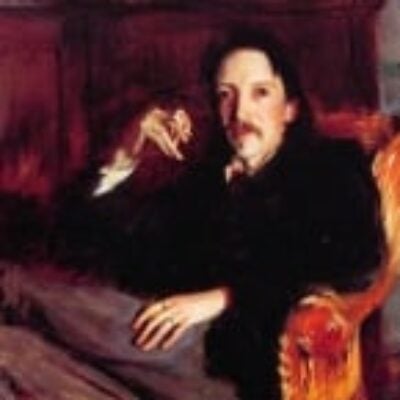
kirchner_-_selbstbildnis_als_soldat

I sit in one of the dives
On Fifty-second Street
Uncertain and afraid
As the clever hopes expire
Of a low dishonest decade:
Waves of anger and fear
Circulate over the bright
And darkened lands of the earth,
Obsessing our private lives;
The unmentionable odour of death
Offends the September night.

All I have is a voice
To undo the folded lie,
The romantic lie in the brain
Of the sensual man-in-the-street
And the lie of Authority
Whose buildings grope the sky:
There is no such thing as the State
And no one exists alone;
Hunger allows no choice
To the citizen or the police;
We must love one another or die.

Defenceless under the night
Our world in stupor lies;
Yet, dotted everywhere,
Ironic points of light
Flash out wherever the Just
Exchange their messages:
May I, composed like them
Of Eros and of dust,
Beleaguered by the same
Negation and despair,
Show an affirming flame.

Read the entire poem here

Wystan Hugh Auden, September 1, 1939 (excerpt) first published in The New Republic, Oct. 18, 1939.


Listen to a reading of the poem by Dylan Thomas:

<object width=”480″ height=”385″><param name=”movie” value=”http://www.youtube.com/v/ED4sN16x1ls&hl=en_US&fs=1&”> <embed src=”http://www.youtube.com/v/ED4sN16x1ls&hl=en_US&fs=1&” type=”application/x-shockwave-flash” allowscriptaccess=”always” allowfullscreen=”true” width=”480″ height=”385″></embed></object>)


This poem achieved great resonance after the events of September 11, 2001—it was widely reproduced, recited on NPR, and interpreted with a link to the tragic events of that day. Indeed, it starts in Manhattan, “in one of the dives on Fifty-second Street,” which Auden later clarified: the Dizzy Club, 62 West 52nd Street (the premises are now occupied by a Beefsteak Charlie’s, I checked). But it captures Auden’s reaction to another tragedy, namely the outbreak of World War II. The poem expresses anger and sadness towards those events, and it questions the historical and mass psychological process that led to the war. In fact, it focuses on the political psychosis of the German people, echoing a few lines of Nietzsche (“Accurate scholarship can / Unearth the whole offence / From Luther until now / That has driven a culture mad”). It then turns to the effect that this war will have on the world and its people, again with psychological overtones. While most of the poem seems thus a chronological bookmark, the last two stanzas—reproduced here–emerge like light from a break in the clouds. They seem to assert defiance in the face of the descending mentality of war. The language is surprisingly naïve but also very moving, and one line, “We must love one another or die” has become a badge for Auden.

It’s curious that Auden felt embarrassed by this poem (he made Penguin include a note saying that it was “trash he was ashamed to have written”) and sought to suppress its inclusion in his later collected works. Perhaps he was concerned about the simplicity and frankness of thought, the somewhat amateurish psychologizing. But the noble note on which the poem ends, its defiant affirmation of love and sympathy in a time of boiling hatred, merits reading, particularly when the troubles and burdens of the world threaten to crush us.


Listen to Benjamin Britten’s Lachrymae: Reflections on a Song of John Dowland (1950) in a performance by the European Camerata. Britten has constructed an entirely instrumental dialogue with one of the most celebrated songs of the Elizabethan era, “Flow My Tears” (1596). He occludes and obstructs the instrumental text in a sort of mock dialogue. The quotation of music is set to this text: “Flow, my tears, fall from your springs! / Exiled for ever, let me mourn; / Where night’s black bird her sad infamy sings, / There let me live forlorn.” A performance of the Dowland song by Andreas Scholl follows.

<object width=”480″ height=”385″><param name=”movie” value=”http://www.youtube.com/v/z83elRRo_J0&hl=en_US&fs=1&”> <embed src=”http://www.youtube.com/v/z83elRRo_J0&hl=en_US&fs=1&” type=”application/x-shockwave-flash” allowscriptaccess=”always” allowfullscreen=”true” width=”480″ height=”385″></embed></object></p>

<object width=”480″ height=”385″><param name=”movie” value=”http://www.youtube.com/v/f7vLOjzG4no&hl=en_US&fs=1&”> <embed src=”http://www.youtube.com/v/f7vLOjzG4no&hl=en_US&fs=1&” type=”application/x-shockwave-flash” allowscriptaccess=”always” allowfullscreen=”true” width=”480″ height=”385″></embed></object></p>

Share
Single Page

More from Scott Horton:

No Comment April 12, 2013, 11:11 am

A Final Act for the Guantánamo Theater of the Absurd?

A new report from Seton Hall University exposes government surveillance of attorney-client conversations

No Comment, Six Questions March 18, 2013, 9:00 am

Brokers of Deceit: How the U.S. Has Undermined Peace in the Middle East

Rashid Khalidi on how the United States sustains the failure of the Israel-Palestine peace process

No Comment, Six Questions February 4, 2013, 9:00 am

Mea Maxima Culpa: Silence in the House of God

Alex Gibney on his documentary investigating the Roman Catholic Church’s handling of child sex-abuse cases

Get access to 163 years of
Harper’s for only $19.97

United States Canada

CATEGORIES

THE CURRENT ISSUE

June 2013

How to Make Your Own AR-15

= Subscribers only.
Sign in here.
Subscribe here.

Long Division

= Subscribers only.
Sign in here.
Subscribe here.

The Separating Sickness

= Subscribers only.
Sign in here.
Subscribe here.

view Table Content

FEATURED ON HARPERS.ORG

[Editor's Note]
Why the AR-15 rifle is here to stay,
the conspiracy theories of Room 237,
and more

Lucas Mann on hope and change in a minor-league-baseball city

[Perspective]
The firearm as emblem of personal sovereignty
“Let’s review our recent national paroxysm about guns, shall we?”
Illustration by Jeremy Traum
[Report]
How to Make Your Own AR-15

= Subscribers only.
Sign in here.
Subscribe here.

“Even if federal gun-control advocates got everything they wanted, they couldn’t prevent America’s most popular rifle from being made, sold, and used. Understanding why this is true requires an examination of how the firearm is made.”
Illustration by Jeremy Traum
[Publisher's Note]
In Boston, An Exercise in Intimidation

= Subscribers only.
Sign in here.
Subscribe here.

In the aftermath of the Boston Marathon bombing, why did so few people protest the decision to lock down parts of the city?
Photo by Sally Vargas/ Talk Radio News Service
[Six Questions]
Class A: Baseball in the Middle of Everywhere

= Subscribers only.
Sign in here.
Subscribe here.

Lucas Mann on hope and change in a minor-league-baseball city
“This one constant in the face of job loss, population loss — all of this erratic change — infused the stands with a sense of continual possibility.”

Minimum number of baboons forced to smoke crack in a 1989 study testing the efficacy of cigarettes as a drug delivery device:

3

A reduction in distrust toward atheists was documented among pious Canadians who are reminded of the Vancouver police.

A Missouri cinema apologized for hiring an actor dressed in body armor and carrying a fake rifle to appear at a screening of Iron Man 3.

Subscribe to the Weekly Review newsletter. Don’t worry, we won’t sell your email address!

HARPER’S FINEST

The Water of My Land

By (Photographer)

Winner of the 2012 Olivier Rebbot Award for best photographic reporting from abroad in magazines or books

Subscribe Today